
Day Trips from Dublin: At a Glance
- Glendalough is about an hour south of Dublin in the Wicklow Mountains, home to a 6th-century monastic settlement and a round tower beside two lakes.
- Newgrange, part of the Brú na Bóinne complex in Co. Meath, is around 45 minutes north of Dublin and is older than the pyramids at Giza. You must book in advance; you cannot just turn up.
- Kilkenny is roughly 90 minutes south, a medieval city built around Kilkenny Castle and the Medieval Mile.
- Powerscourt Estate, just 40 minutes south of the city, pairs formal 18th-century gardens with Ireland’s highest waterfall.
- Malahide Castle is the closest option on this list, 25 minutes north of Dublin, with 260 acres of parkland to explore.
- Guided day tours cover most of these sites, so you don’t need to hire a car or navigate rural roads yourself.
If you’re basing yourself in Dublin, you’re closer to some of Ireland’s best-known heritage sites than most visitors realise. South of the city, the Wicklow Mountains hold Glendalough and Powerscourt Estate; north, the Boyne Valley holds Newgrange, one of the oldest monuments in the world. Kilkenny and Malahide Castle round out the list below, and none of them require an overnight stay to see properly.
Table of Contents
- Why Dublin Works So Well as a Base for Day Trips
- Is Glendalough Worth the Day Trip from Dublin?
- Is a Newgrange Day Trip from Dublin Worth It?
- Kilkenny: A Full Medieval City in a Single Day
- Powerscourt Estate: Pairing Gardens with a Wicklow Day Trip
- What About Malahide Castle for a Shorter Day Out?
- Comparing the Best Day Trips from Dublin
- Plan Your Day Trip from Dublin
- FAQs: Day Trips from Dublin
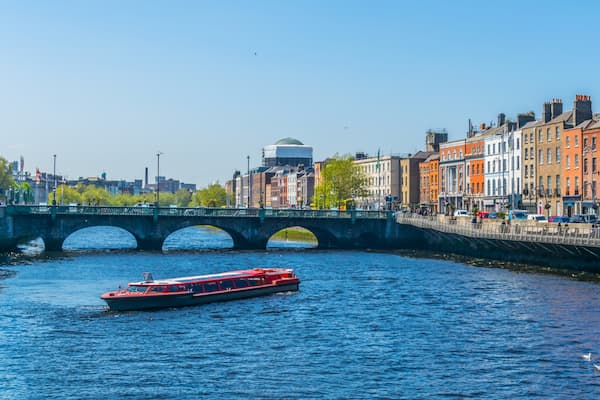
Why Dublin Works So Well as a Base for Day Trips
Dublin isn’t just Ireland’s capital, it’s also within striking distance of two entirely different regions: the Wicklow Mountains to the south and the Boyne Valley to the north. Neither requires an overnight stay.
That’s part of why so many of our small group tours start or end in the city. Guests can spend a night or two in Dublin, take in the sites below, and still have time to explore the capital itself before heading further afield on a longer Ireland tour from Dublin.
If you’re deciding between a self-drive day and a guided one, it’s worth knowing that most of these destinations don’t need a car. Buses run to Glendalough and Kilkenny, and Newgrange requires a guided visitor centre tour regardless of how you arrive.
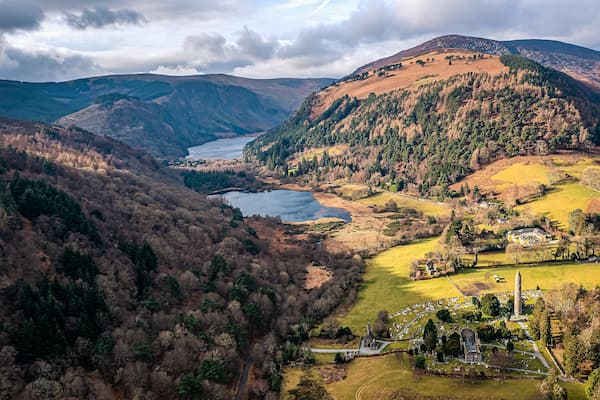
Is Glendalough Worth the Day Trip from Dublin?
Yes. Glendalough is one of the most rewarding day trips available from the city, and you don’t need more than a day to see its highlights properly.
Saint Kevin founded a monastic settlement here around 550 AD, after retreating into the valley to live as a hermit. What grew around him became one of the most important religious centres in early medieval Europe, according to Heritage Ireland, which manages the site today.
The remains still standing include a well-preserved round tower, a ruined cathedral, and several smaller churches, all set around two lakes inside the Wicklow Mountains National Park. St Kevin’s Bed, a small cave cut into the cliff above the Upper Lake, is where he’s said to have lived and prayed.
Glendalough sits around 40-50km south of Dublin, close to an hour’s drive through the Wicklow Mountains. There are two walking loops around the lower and upper lakes if you want to extend your visit beyond the monastic site itself.
Where to Visit in Glendalough
A few key spots are worth building your visit around, from the monastic ruins to the walking loops around both lakes.
- The Monastic City: the round tower, cathedral ruins, and graveyard sit together near the entrance, free to access year-round (parking at the visitor centre is charged daily).
- Lower Lake loop: a short, flat walk of around 3km taking in the Monastic City in under an hour.
- Upper Lake loop: a longer walk of around 5-9km depending on the route, climbing steadily toward St Kevin’s Bed and the Spinc viewpoint.
- St Kevin’s Bed: a small cave cut into the cliff above the Upper Lake, best reached via the Upper Lake loop; paths here are uneven and can get muddy, so proper footwear matters.
- The visitor centre car park: fills quickly on weekends and bank holidays if you’re driving yourself; guided tours use a separate coach drop-off.
Is a Newgrange Day Trip from Dublin Worth It?
It is, provided you book ahead. Newgrange sits about 30 miles (45 minutes) north of Dublin in Co. Meath, and it’s the one destination on this list where turning up without a ticket won’t work.
Newgrange is a passage tomb built around 3,200 BC, which makes it older than the pyramids at Giza and Stonehenge. It’s part of Brú na Bóinne, a UNESCO World Heritage Site that also includes the neighbouring monument at Knowth.
Every visit starts at the Brú na Bóinne Visitor Centre on the banks of the River Boyne. There’s no direct access to Newgrange or Knowth from the road; you’re brought out by shuttle bus as part of a guided tour, and Discover Boyne Valley recommends booking online well ahead, particularly between April and November when demand is highest.
The standard tour, which covers the exhibition plus guided visits to both Knowth and the Newgrange chamber, runs at around three hours. If time is tight, that’s worth building into your day, since Newgrange isn’t somewhere you can quickly tick off.
Newgrange Day Trip: Things to Know Before You Go
Access here works differently from the other stops on this list, so a few things are worth sorting out in advance.
- Brú na Bóinne Visitor Centre: every visit starts here, on the banks of the River Boyne, with an exhibition on the wider passage tomb complex.
- Newgrange chamber: the main passage tomb, known for its winter solstice alignment, reached only by shuttle bus as part of a guided tour.
- Knowth: the neighbouring monument, included in the standard tour alongside Newgrange, with its own passage tombs and decorated kerbstones.
- Book ahead: secure tickets online in advance, especially between April and November when demand is highest.
- Allow around three hours: the standard tour covers the exhibition plus guided visits to both Knowth and the Newgrange chamber.
Kilkenny: A Full Medieval City in a Single Day
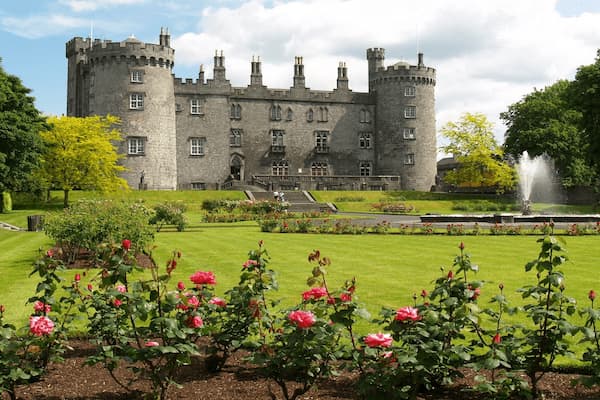
Kilkenny gives you a full medieval city in a single visit: a castle, a cathedral, and a walkable route connecting the two. It’s about 90 minutes (77 miles) south of Dublin, making it a slightly longer trip than Glendalough or Newgrange, but a manageable one.
The Medieval Mile runs from Kilkenny Castle down through the city centre to St Canice’s Cathedral and its round tower. Along the way, you’ll pass the kind of narrow medieval lanes and stone buildings that give Kilkenny its nickname, the Marble City, after the dark limestone quarried locally for centuries.
Kilkenny Castle itself dates back to the 12th century and sits above the River Nore, with parkland behind it that’s worth a walk if the weather holds. If you’d rather not plan the route yourself, Visit Kilkenny lists a Medieval Mile pass that bundles several of the main sites together.
Kilkenny sits alongside Glendalough and Newgrange on our list of Ireland’s best attractions, and it’s a regular stop on our cultural tours of Ireland for exactly this reason.
Where to Visit in Kilkenny
Kilkenny’s sights sit close enough together that you can walk between all of them in a single day.
- Kilkenny Castle: a 12th-century castle above the River Nore, with parkland behind it worth a walk if the weather holds.
- The Medieval Mile: the walking route linking the castle to St Canice’s Cathedral, past narrow medieval lanes and the dark limestone buildings that give the city its Marble City nickname.
- St Canice’s Cathedral and round tower: at the far end of the Medieval Mile, marking the older, ecclesiastical side of the city.
- The Medieval Mile Pass: bundles several of the main sites together if you’d rather not plan the route yourself.
Powerscourt Estate: Pairing Gardens with a Wicklow Day Trip
If you’re already heading toward Glendalough, Powerscourt Estate is worth building into the same day. It’s around 40 minutes south of Dublin, closer to the city than Glendalough itself, and pairs well as either a stop on the way down or a shorter half-day trip on its own.
The gardens were laid out in the 1740s and cover roughly 20 hectares, mixing formal terraces, an Italian garden, a Japanese garden, and a walled garden. It’s a different kind of day out to Glendalough: manicured rather than wild, but no less impressive.
Around six kilometres away is Powerscourt Waterfall, Ireland’s highest at roughly 121 metres. It’s a separate ticket and a short drive from the main estate, so plan for both if you want to see them in one visit.
The gardens are at their best in late spring, when the borders are in full bloom; our guide to easygoing activities during springtime in Ireland covers a few more low-key options if you’re visiting in that window.
Powerscourt Estate: Things to Know Before You Go
The estate splits into two separate experiences, so it’s worth knowing both before you set off.
- Allow half a day: most visitors spend 2-3 hours in the gardens alone, more if you’re building in the waterfall as well.
- The waterfall has its own car park: it’s not walkable from the main estate, so you’ll need to drive between the two rather than combine them on foot.
- Book tickets online where possible: it’s generally quicker than paying on arrival, particularly during peak summer weekends.
- There’s a café and playground on site: useful if you’re travelling with kids and want to split the visit into shorter stretches.
- Weather affects the visit differently to Glendalough: the gardens are formal and sheltered, so a wet day here is a more comfortable option than an exposed Wicklow walking loop.
What About Malahide Castle for a Shorter Day Out?
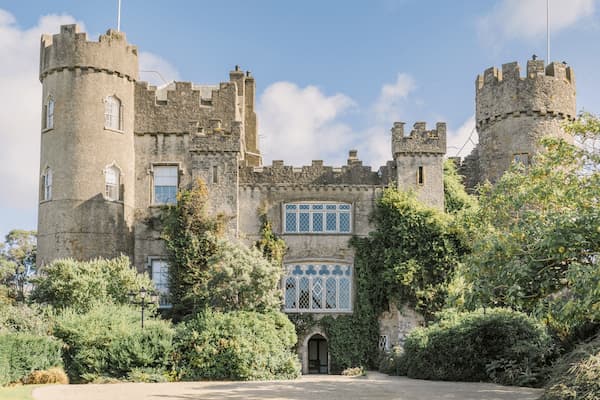
Malahide Castle is the shortest trip on this list, about 25 minutes north of Dublin, which makes it a solid option if you’re short on time or travelling with kids who won’t sit still for a longer drive.
The castle’s tower house dates back to the 12th century, and the Talbot family lived here almost continuously from 1185 until 1975, nearly 800 years under one family. The estate now sits on 260 acres of parkland by the sea in Malahide, with walled gardens and a botanical collection alongside the castle tour itself, according to Malahide Castle and Gardens.
Because it’s so close to the city, Malahide works well combined with Howth on the same day, or as an easy half-day if you’d rather spend the afternoon back in Dublin. If you’re new to Ireland and easing into your trip, it’s also a gentle way to start; our guide to where to visit in Ireland for first-time visitors covers a few more low-key options like it.
Malahide Castle: Things to Know Before You Go
The estate is compact enough to cover in half a day, with the castle itself as the centrepiece.
- The castle tour: covers the 12th-century tower house and the rooms lived in by the Talbot family for almost 800 years, until 1975.
- The walled gardens: sit alongside the castle, with a botanical collection worth building into the visit.
- 260 acres of parkland: by the sea in Malahide, with room to walk beyond the castle grounds themselves.
- Pair it with Howth: the two combine well on the same day given how close Malahide sits to the city.
Comparing the Best Day Trips from Dublin
| Destination | Distance from Dublin | Best for | Booking needed |
| Glendalough | ~40-50km / 1 hour | Monastic ruins, lake walks, Wicklow scenery | No, though guided tours are available |
| Newgrange (Brú na Bóinne) | ~30 miles / 45 minutes | Ancient history, UNESCO site | Yes, essential |
| Kilkenny | ~77 miles / 90 minutes | Medieval city, castle, cathedral | No, though the Medieval Mile pass is worth pre-booking |
| Powerscourt Estate | ~40 minutes | Formal gardens, Ireland’s highest waterfall | No, but separate tickets for house and waterfall |
| Malahide Castle | ~25 minutes | A shorter, family-friendly day out | No |
Plan Your Day Trip from Dublin
Between Wicklow’s Glendalough and Powerscourt, the Boyne Valley’s Newgrange, and Kilkenny and Malahide Castle further afield, you’ve got a mix of ancient history, formal gardens, and a medieval city all within reach of Dublin. Each is worth a day on its own, but they also work well strung together into a longer itinerary.
Our small group tours of Ireland and private experiences take you to Wicklow, the Boyne Valley, and beyond, with a local driver-guide who knows which stops are worth the extra time. Get in touch today and start planning your day trips from Dublin.
FAQs: Day Trips from Dublin
Can you visit Newgrange without a tour?
No. All visits to Newgrange and Knowth start at the Brú na Bóinne Visitor Centre, and you’re taken to the monuments by shuttle bus as part of a guided visit. There’s no independent access to either site.
Is Glendalough or Kilkenny better for a first day trip from Dublin?
Glendalough is the shorter drive and gives you a self-contained monastic site and lake walk. Kilkenny takes longer to reach but offers more to see in a full day, including the castle, cathedral, and medieval streets.
Can you combine Glendalough and Powerscourt in one day?
Yes, they’re both in Wicklow and roughly on the same route south of Dublin, which makes them a natural pairing if you want gardens and monastic history in the same trip.
Do you need a car for these day trips?
Not necessarily. Glendalough and Kilkenny are both served by bus routes from Dublin, and guided day tours run to most of the destinations on this list, including Newgrange, where a guide is required regardless.
How far in advance should you book Newgrange tickets?
Discover Boyne Valley advises booking as early as possible, particularly for visits between April and November, when the site sees the most demand and time slots fill up quickly.