
Ireland sits on the western edge of Europe, right where the Atlantic meets the land, and that position gives it wildlife you won’t find grouped so closely anywhere else. Red deer bellowing in the mountains, puffins nesting on sea cliffs, humpback whales feeding a short boat ride offshore. Most of it is easy to reach, and a lot of it you’ll pass on an ordinary day out.
This is our guide to the wildlife in Ireland worth planning a trip around: what you can see, where the best spots are, and the best time of year to visit. Here’s where to find Ireland’s wildlife, what you can realistically expect to see, and when to go for the best of it.
At a Glance: Wildlife in Ireland
Ireland is one of Europe’s most underrated wildlife destinations, with native red deer, seabird colonies, and some of the best whale and dolphin watching on the continent, much of it inside seven national parks along the Wild Atlantic Way.
- Red deer: Killarney National Park, year-round; the autumn rut runs late September to November
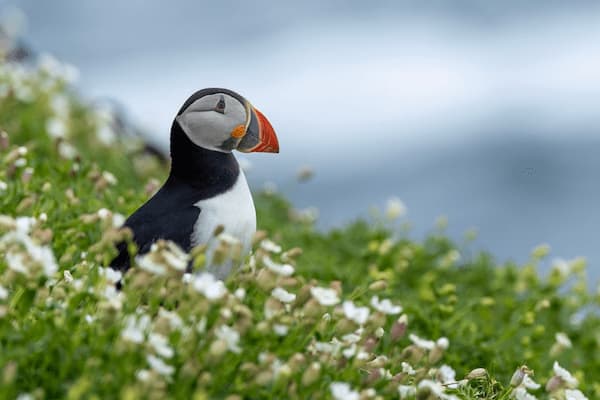
- Puffins: Skellig Islands, Cliffs of Moher and Rathlin Island, roughly April to early August
- Whales and dolphins: West Cork and the south coast; minke from spring, humpback and fin whales from summer into winter
- Seals and basking sharks: all along the Atlantic coast; basking sharks appear late spring and summer
- Best overall time to visit: late spring and summer for seabirds and marine life; autumn for the deer rut
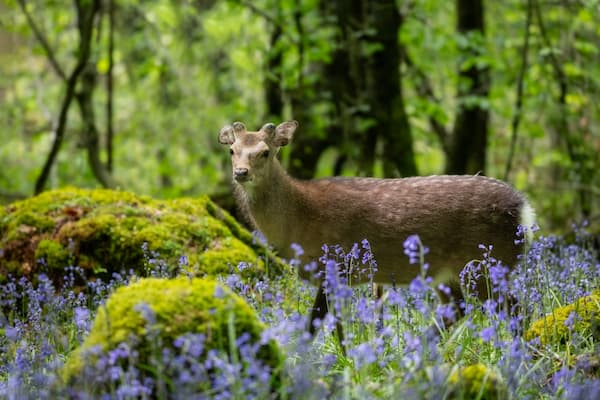
Table of Contents
- At a Glance: Wildlife in Ireland
- What Wild Animals Live in Ireland?
- Ireland’s National Parks: Where the Wildlife Roams Free
- Whale and Dolphin Watching in Ireland
- Where Can You See Puffins in Ireland?
- Seals, Basking Sharks and Ireland’s Marine Wildlife
- Geoparks and Wild Coastlines: Ireland’s Natural Wildlife Havens
- When Is the Best Time to See Wildlife in Ireland?
- The Best Wildlife Experiences in Ireland
- Ready to See Ireland’s Wildlife for Yourself?
- Frequently Asked Questions About Wildlife in Ireland
What Wild Animals Live in Ireland?
Ireland is home to around 50 species of land and sea mammal, more than 400 bird species, over 4,000 plant species and thousands of insects. Ireland has fewer species than mainland Europe. It became an island after the last Ice Age, before many animals could cross back. That smaller cast is part of what makes its wildlife easier to see.
A few species stand out as the ones worth travelling for. The red deer is Ireland’s only native deer, and it now shares the hills with introduced sika deer and red-sika hybrids.
Coastal waters hold grey and common seals, several species of dolphin, and the second-largest fish in the world, the basking shark.
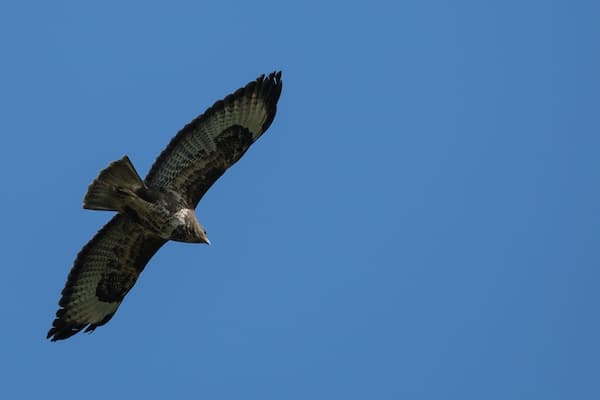
Overhead, you’ll find everything from peregrine falcons to reintroduced golden eagles, the latter brought back to Donegal after more than a century’s absence.
One thing Ireland doesn’t have: anything that can hurt you. There are no snakes, no bears in the wild, and no large predators. That makes for relaxed walking, so you can explore the hills and coastline at an easy pace, whether on your own or with a guide on one of our small group tours.
Ireland’s National Parks: Where the Wildlife Roams Free
Ireland’s national parks are the single best place to see its wildlife, protecting the habitats where deer, birds of prey and rare plants thrive. The Republic has seven national parks, including Ireland’s first marine park off the Kerry coast, covering over 160,000 acres of unspoiled ground. Between our scheduled and private trips, we explore or stay beside five of them.
Red Deer in Killarney National Park
Killarney National Park in County Kerry is a rugged wilderness of lakes, woods and waterfalls beneath Carrauntoohil, Ireland’s highest mountain. It’s the home of the Irish red deer, the country’s only native herd.
You can spot the deer year-round, but two windows stand out:
- Spring for the new calves
- Late September to November for the annual rut, when stags bellow across the valleys at dusk
Each year we name the dominant stag “Tuan,” after the shape-shifting figure of Irish mythology. Kerry sits at the heart of several of our routes, including the Wild Irish Experience, and there’s more on the wider region in our Ring of Kerry travel guide.
Connemara National Park and Its Boglands
Connemara National Park in County Galway is thousands of hectares of mountain, bog, heath and grassland, well off the beaten track. The boglands support plant and animal life you won’t see in more manicured parks.
Look out for:
- Songbirds like meadow pipits, skylarks and stonechats
- Birds of prey, with kestrel and sparrowhawk hunting overhead
- At dusk, foxes, stoats, pine marten and bats
The park’s largest resident is the Connemara pony, a domestic breed but as much a part of this countryside as the hills themselves.
Golden Eagles in Glenveagh National Park
Glenveagh National Park in west Donegal is a remote landscape of mountains, lakes and oak forest, with a 19th-century castle on the shore of Lough Veagh. At over 16,000 hectares, it’s one of the largest parks in the country.
Most of the action here is in the skies:
- Golden eagles, reintroduced here from 2001 and now breeding in the Derryveagh Mountains
- Ravens and peregrines sharing the skies
- Red deer, badgers and foxes holding the ground below
Glendalough and Wicklow Mountains National Park
Glendalough, “the valley of the two lakes,” sits in the Wicklow Mountains within easy reach of Dublin, which makes it one of the most accessible wildlife spots in Ireland. It pairs a 6th-century monastic site and 30-metre round tower with real variety of wildlife.
Keep an eye out for:
- Red deer, sika deer and their hybrids roaming the valley and surrounding woods
- Wild goats, foxes and badgers across the wider ground
- Grey herons stalking the rivers
- Ravens and peregrine falcons breeding on the cliffs above the Upper Lake
The Burren: Rare Plants and Pine Martens
The Burren National Park in County Clare is around 1,500 hectares of limestone unlike anywhere else in Ireland, a place where Arctic-alpine and Mediterranean plants grow side by side on bare rock.
Among its residents:
- Common frogs and smooth newts in the wetlands
- Ravens, peregrines, kestrels and hen harriers working the skies
- Hares, foxes and pygmy shrews by day, with stoats weaving through the stone walls
- Seven bat species, including the internationally endangered lesser horseshoe bat
- Wild goats, in a long-established herd that roams the limestone
Whale and Dolphin Watching in Ireland
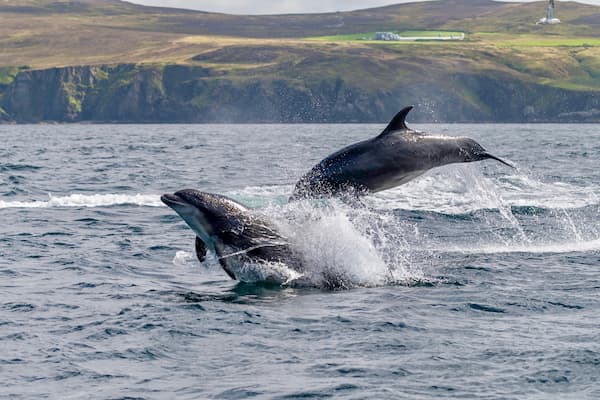
Ireland is one of the best places in Europe for whale and dolphin watching. Its entire coastline was declared Europe’s first whale and dolphin sanctuary in 1991, and 25 cetacean species have since been recorded in its waters, several of them seen regularly off the south coast.
The seasons stack up neatly through the year. Minke whales arrive in spring, humpbacks in late summer, and fin whales, the second-largest animal on earth, appear from June into January as they follow shoals of fish close to shore.
Dolphin Watching Along the Wild Atlantic Way
The 2,500km Wild Atlantic Way is effectively one long dolphin-watching gallery. Common dolphins gather off the south coast in large numbers, sometimes in the hundreds, and often bow-ride right alongside the boat. The Shannon Estuary is home to a resident group of bottlenose dolphins, a rare thing in European waters.
The shy harbour porpoise is the fifth cetacean we see regularly, usually singly or in small feeding groups. Dolphins are among the most reliable sightings along this coast, particularly on the stretch of the Wild Atlantic Way that runs through the south-west.
Whale Watching in West Cork
West Cork is Ireland’s whale-watching heartland. Every year its rich waters draw minke, fin and humpback whales in to feed, and purpose-built boats out of the local harbours give you a steady platform to see them.
For the science and current sighting records, the Irish Whale and Dolphin Group keeps the national database, worth a look before you travel to see what’s been spotted lately.
Where Can You See Puffins in Ireland?
The best places to see puffins in Ireland are the Skellig Islands off Kerry, the Cliffs of Moher in Clare, and Rathlin Island off the Antrim coast. Puffins come ashore to breed in the warmer months and spend the rest of the year out at sea.
When Are Puffins in Ireland?
Puffins are in Ireland from around April to early August. Late spring and early summer are the best time to see puffins in Ireland, when the birds are busiest at their cliff-top burrows. By August most have left for the open Atlantic.
The Skellig Islands and Their Seabirds
The Skellig Islands are one of the great seabird sites in the North Atlantic. Guillemots, kittiwakes and puffins nest here through summer, and Little Skellig holds around 30,000 pairs of gannets, one of the largest gannet colonies in the world. Eco boat tours circle both islands so you can see the birds and the historic monastery without landing.
Around the boats you’ll often spot grey seals, basking sharks and, now and then, a humpback whale. For seabird identification and colony information, BirdWatch Ireland is the authority.
Seals, Basking Sharks and Ireland’s Marine Wildlife
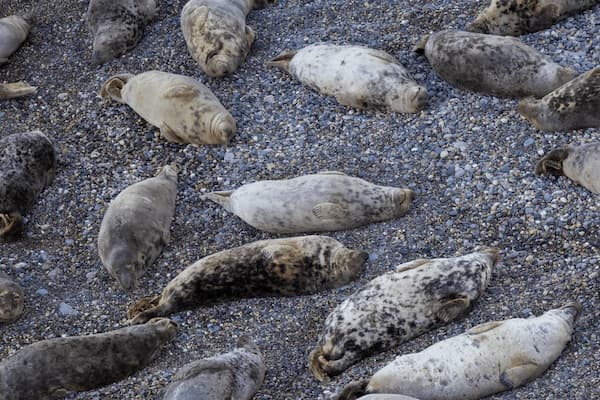
Beyond the whales, Ireland’s coast teems with marine life you can see from a boat or a headland. Grey and common seals are numerous right around the island, and they’re curious, friendly and easy to find along the Wild Atlantic Way.
Basking sharks are the summer highlight. In late spring and summer, these enormous, harmless plankton-feeders migrate north along the coast, often close enough to see the dorsal fin cutting the surface.
The Atlantic edge brings the unexpected too. Rare whales and storm-blown American birds appear most years, which is part of what keeps birdwatchers coming back.
Geoparks and Wild Coastlines: Ireland’s Natural Wildlife Havens
Ireland has three UNESCO Global Geoparks, and each is a wildlife haven as much as a geological one. They’re built around the idea of exploring on foot, by bike or by boat while leaving no trace, an approach we share as part of our commitment to the places and communities we travel through.
1. Burren and Cliffs of Moher Geopark
This geopark runs from the coast to the Burren National Park, its limestone crevices home to rabbits, wild goats, badgers and Ireland’s only native lizard, the common lizard.
2. Copper Coast Geopark
In County Waterford, this is a compact stretch of sea stacks, old beaches and copper-mining history spread across seven villages.
3. Cuilcagh Lakelands Geopark
Straddling the Fermanagh–Cavan border, this was the world’s first cross-border geopark. You can read more about all three on Ireland’s official geoparks page.
The geoparks aren’t the only protected coastlines worth seeking out. In the north, County Antrim’s Causeway Coast is an Area of Outstanding Natural Beauty taking in the Giant’s Causeway, where guillemots, razorbills, kittiwakes and fulmars crowd the cliffs and, around Rathlin Island, the puffins return in early April.
The east coast comes into its own in winter. The Wexford Wildfowl Reserve is a crucial cold-season home for Greenland white-fronted geese and nearly 200 species of waterfowl.
When Is the Best Time to See Wildlife in Ireland?
The best time to see wildlife in Ireland depends on what you want to see, but late spring through summer covers the most, with autumn a strong second for the deer rut. Here’s how the year breaks down:
| Season | What to see | Where |
| Spring (Mar–May) | Puffins arriving, minke whales, basking sharks, new deer calves | Skelligs, West Cork, Killarney |
| Summer (Jun–Aug) | Puffins, gannets, seals, humpback and fin whales, dolphins | Skelligs, Cliffs of Moher, south coast |
| Autumn (Sep–Nov) | Red deer rut, fin whales, migrating birds | Killarney, West Cork |
| Winter (Dec–Feb) | Greenland white-fronted geese, whooper swans, seals | Wexford, Wicklow |
The Best Wildlife Experiences in Ireland
The best way to get close to Ireland’s wildlife is to get out on the water and into the parks with people who know them. These are the experiences we build into our adventure tours of Ireland and tailor-made trips.
Sea Kayaking in Dingle
A half-day paddle around Dingle Harbour takes you into a coastline best seen at water level.
- Good for: complete beginners and seasoned paddlers alike
- What to expect: quiet sea caves and sheltered water
- Wildlife: grey seals and seabirds along the sheltered harbour
Eco Boat Tours to the Skellig and Blasket Islands
Boat tours run out to the islands off the Kerry coast, most with several departures a day.
- Good for: close island and seabird views without a strenuous landing
- What to expect: cruises around Skellig Michael and Little Skellig (no landing required), or a trip to Great Blasket with a landing on the right day
- Wildlife: seals, puffins, dolphins, minke whales and basking sharks
Boat Trips Beneath Slieve League and the Cliffs of Moher
Two of Ireland’s great cliff faces are best seen from the water below.
- Good for: dramatic cliff scenery and seabird colonies at sea level
- What to expect: boat tours beneath Slieve League in Donegal (cliffs rising 600 metres, among the highest in Europe) and the Doolin cruise to the Great Sea Stack off Clare
- Wildlife: thousands of nesting seabirds from April to mid-July, plus dolphins, whales, seals and summer basking sharks
Ready to See Ireland’s Wildlife for Yourself?
From the red deer of Killarney to the puffins of the Skelligs and the whales of West Cork, Ireland packs a remarkable amount of wildlife into a small, walkable island.
Browse our small group tours of Ireland, explore the wider region in our travellers’ guide, or contact our team to plan a trip around the wildlife you most want to see.
Frequently Asked Questions About Wildlife in Ireland
Why are there no snakes in Ireland?
The St Patrick story is a myth. Snakes never reached Ireland because it was cut off by rising seas after the last Ice Age, before they could migrate across from mainland Europe. Britain, which stayed connected for longer, has three native snake species; Ireland has none.
Are there red squirrels in Ireland?
Yes, and they’re doing better than they were. The native red squirrel was pushed back for decades by the introduced grey, but the recovery of the pine marten, a natural predator of the grey squirrel, has helped red populations rebound in several counties. Your best chance of seeing one is in mature conifer and mixed woodland.
What is the rarest wildlife in Ireland?
Among the rarest is the natterjack toad, Ireland’s only native toad, found in the wild solely around the dunes of southwest Kerry. Others include the lesser horseshoe bat, confined to the west, and the pine marten, which was close to extinction a century ago and is only now recovering.
Where is the best place to see seals in Ireland?
Grey and common seals haul out all around the coast, but a few spots stand out. Strangford Lough in County Down holds one of the country’s largest common seal colonies, while the Blasket Islands off Kerry are known for their grey seals. Many harbour and headland walks will turn one up.
Do Ireland’s national parks charge an entry fee?
No. Admission to Ireland’s national parks is free, including Killarney, Glenveagh, Connemara and the Burren. Some visitor centres and car parks carry a charge, but the parks and their trails are open to everyone at no cost.
What should you bring for wildlife watching in Ireland?
A pair of binoculars makes a real difference for seabirds, deer and distant whales. Bring waterproofs and warm layers whatever the season, as coastal weather turns quickly, and sturdy footwear for soft or uneven ground. A camera with a zoom lens is worth having on boat trips.