
Ireland in summer is a different country. The days stretch long into the evening, the west coast comes alive with walkers, swimmers and festival-goers, and the landscapes look exactly like the Ireland you’ve been picturing, only better.
If you’re wondering where to go, we’ve put together this guide to the best places to visit in Ireland in summer, drawing on the destinations our guests return from raving about year after year.
At a Glance: Best Places to Visit in Ireland in Summer
- Wild Atlantic Way: Ireland’s iconic 2,500km coastal route is at its best in summer, with long evenings and open roads.
- Connemara: dramatic bog and mountain scenery in County Galway’s Gaeltacht heartland.
- Achill Island: Ireland’s largest island, with Blue Flag beaches and serious hiking.
- Cliffs of Moher: 14km of dramatic sea cliffs in County Clare, best explored on foot.
- Killarney National Park: Kerry’s outdoor playground, with lakes, waterfalls and red deer.
- Dublin: a coastal city with easy day-trip access to Wicklow and Glendalough.
- Giant’s Causeway: Northern Ireland’s UNESCO-listed natural wonder on the Causeway Coast.
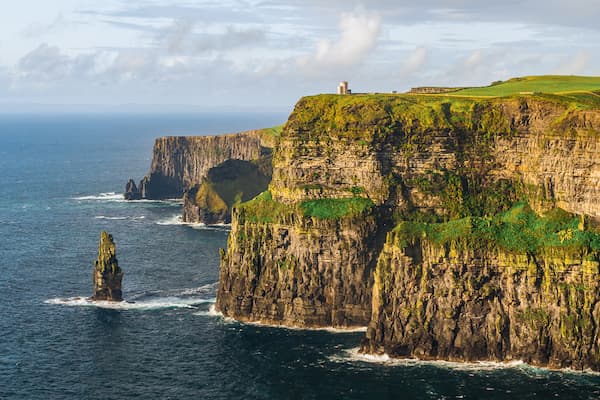
Table of Contents
- What Makes Summer the Best Time to Visit Ireland?
- Best Places to Visit on the Wild Atlantic Way in Summer
- Best Places to Visit in Kerry and the South in Summer
- Top Places to Visit in Dublin in Summer
- Best Places to Visit on the Causeway Coast in Summer
- Hidden Gems: The Best Places in Ireland to Visit Off the Beaten Track
- Best Things to Do in Ireland in Summer: Festivals, Coastal Walks and More
- What to Know Before Planning Your Summer Trip to Ireland
- So, Where Should You Go in Ireland This Summer?
- FAQs: Best Places to Visit in Ireland in Summer
What Makes Summer the Best Time to Visit Ireland?
Summer is the most generous season on the island. June, July and August bring the longest days, with sunset arriving as late as 10pm in late June, giving you more time to explore, more light on the landscapes, and a warmer atmosphere in the towns and villages you pass through.
The weather is the most settled of the year, though “settled” in Ireland still means you’ll want a rain jacket. Average temperatures sit between 16°C and 20°C (61–68°F), and the west coast in particular sees long, bright spells that turn the Atlantic a genuine shade of blue.
It’s also festival season. From the Galway Arts Festival to the Fleadh Cheoil, summer in Ireland brings a real energy to the places on this list, something that’s absent in the quieter months.
Best Places to Visit on the Wild Atlantic Way in Summer
The Wild Atlantic Way is the world’s longest defined coastal route at 2,500km, running from Malin Head in Donegal to Kinsale in County Cork. Summer is the ideal time to drive it: the roads are clear early in the morning, the scenery is at its most vivid, and the villages along the route are fully open and busy with life.
Connemara: Wild Landscapes and Endless Roads
Connemara is one of the most distinctive landscapes in Ireland, and summer is when it looks its most dramatic. The long light catches the rust-coloured bogs, the lakes run deep blue, and the peaks of the Twelve Bens sit clear against the sky.
Highlights
- It’s the largest Gaeltacht (Irish-speaking) region in Ireland, and traditional music sessions run regularly in the local pubs throughout the summer.
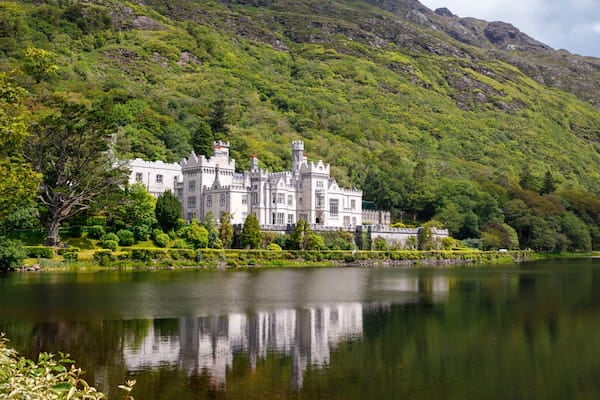
- Kylemore Abbey, one of Ireland’s most photographed buildings, sits at the edge of a lake in the heart of Connemara and is open to visitors year-round.
- An e-bike tour through Connemara is one of the best ways to cover the landscape at a pace that lets you properly take it in.
Our 10 Day Wild Irish Experience Tour includes two nights in Connemara, enough time to explore the region without rushing through it.
Achill Island: Ireland’s Best Summer Beach Destination
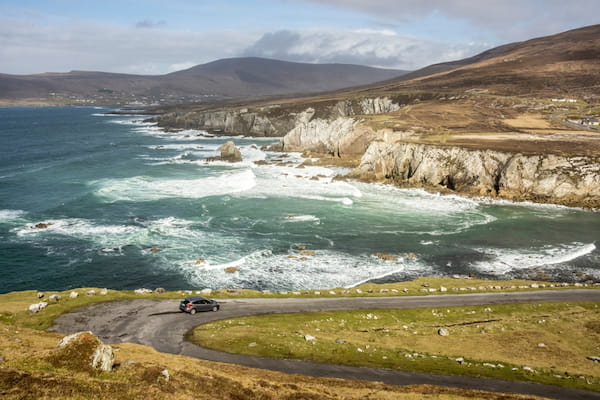
Achill is Ireland’s largest island and is connected to the Mayo mainland by a bridge, making it straightforward to reach. What awaits is one of the most impressive stretches of coastal scenery in the country.
Highlights
- Keem Bay is a horseshoe-shaped beach at the island’s western tip, backed by 600m cliffs and consistently rated among Ireland’s finest beaches.
- Achill holds several Blue Flag beaches, with calm, clear water suited to swimming, snorkelling and sea kayaking in summer.
- The hike to the top of Slievemore (671m) rewards with panoramic views across the island, the Atlantic, and Clare Island to the south.
The Cliffs of Moher in Summer
The Cliffs of Moher are among Ireland’s most visited natural attractions, and with good reason. They stretch 14km along the County Clare coastline and reach 214m at their highest point at O’Brien’s Tower.
Highlights
- Walking from the village of Doolin to the Cliffs on the coastal path is a quieter and more rewarding experience than arriving at the main visitor centre entrance.
- The Cliffs form part of the Burren and Cliffs of Moher Geopark, a UNESCO Global Geopark covering much of north Clare.
- On a clear summer’s day, the Aran Islands are visible from the cliff edge, a view that puts the sheer scale of Ireland’s west coast into perspective.
Further along the Wild Atlantic Way, Bundoran is Ireland’s surf capital and hosts its annual Sea Festival each July, while the Aran Islands (just 45 minutes by ferry from Galway) offer a glimpse of a way of life that has changed very little in a century.
Best Places to Visit in Kerry and the South in Summer
Kerry consistently ranks among Ireland’s most visited counties, and summer makes clear exactly why. The combination of mountain, lake, peninsula and coastline is hard to match anywhere else on the island.
Killarney National Park: Kerry’s Outdoor Playground
Killarney National Park was Ireland’s first national park, established in 1932, and it remains one of the finest places to spend a summer’s day in the country.
Highlights
- Ladies View, Torc Waterfall and Muckross House are three of the park’s standout attractions, all within easy reach and well-suited to a single full day.
- The park is home to Ireland’s only wild herd of native red deer, as well as sika deer and Irish hares. Summer is the most reliable season for sightings.
- Cycling the trails around the Lakes of Killarney is one of the most popular summer activities, getting you deeper into the park than the main tourist paths.
Our 7-Day Wild Atlantic Way Tour and 5 Day South Coast Experience both include time in Killarney. You can also explore the region in detail on our Ring of Kerry travel guide.
Kinsale, Co. Cork: Ireland’s Gourmet Capital by the Sea
Kinsale sits at the southern end of the Wild Atlantic Way and earns its place on this list on two distinct counts: its food and its setting.
Highlights
- Kinsale is widely regarded as the gourmet capital of Ireland, built on a foundation of fresh Atlantic seafood, and its restaurants consistently rank among the best in the country.
- Charles Fort, a 17th-century star-shaped fortress on the edge of the harbour, is one of the best-preserved examples of military architecture in Ireland.
- The town’s brightly painted buildings, bobbing yachts and tidal harbour make it one of the most photogenic places on the south coast in summer.
While in the south, the Blarney Stone at Blarney Castle is worth the detour for the views from the battlements alone. And for those keen to push into the mountains, Carrauntoohil (Ireland’s highest peak at 1,038m) is accessible from Killarney and one of the most rewarding summer hikes in the country.
Top Places to Visit in Dublin in Summer
Dublin works well as a summer base. It’s compact, walkable, and within easy reach of two of Ireland’s best day-trip destinations: the Wicklow Mountains and the Boyne Valley.
Dublin City: Culture, History and Coastal Day Trips
Dublin in summer has a noticeably lighter energy: outdoor terraces fill up, the parks become natural gathering points, and the seafront areas on the north and south sides of the bay come into their own.
Highlights
- Trinity College’s Long Room library is one of Ireland’s most impressive interiors, home to the Book of Kells. Arrive early in summer to avoid the peak queues.
- The Guinness Storehouse runs live music and Irish dance performances through the summer months, making it considerably more than just a brewery tour.
- Howth and Malahide (both reachable by DART in under 30 minutes) offer clifftop walks, seafood restaurants and a completely different pace to the city centre.
Our Dublin travel guide covers the city’s highlights in more detail for those spending a few days there before or after a tour.
Glendalough and the Wicklow Mountains: Best Day Trip from Dublin
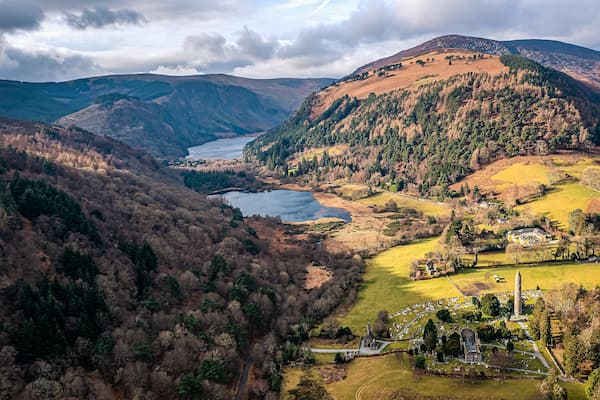
Glendalough sits about an hour south of Dublin in the heart of Wicklow Mountains National Park, and it’s consistently one of the most rewarding day trips available from the capital.
Highlights
- The 6th-century monastic settlement at Glendalough, founded by St Kevin, is one of Ireland’s best-preserved early Christian sites, where the round tower and ruined cathedral sit beside a glacial lake in a genuinely striking setting.
- Wicklow Mountains National Park surrounds the valley with hiking trails ranging from easy lakeside walks to the longer Wicklow Way.
- Red deer, sika deer and Irish hares are all regularly spotted in the park through the summer months.
Newgrange in County Meath (older than the pyramids at Giza and a UNESCO World Heritage Site) is a strong second option if ancient history is the priority for your day out of Dublin.
Best Places to Visit on the Causeway Coast in Summer
Northern Ireland’s Causeway Coast is one of the most dramatic stretches of coastline in Europe, and it rewards visitors who make the journey north.
Giant’s Causeway: Northern Ireland’s Most Famous Natural Wonder
The Giant’s Causeway is the Causeway Coast’s headline attraction, and it earns that billing. Around 40,000 interlocking basalt columns, formed by volcanic activity 60 million years ago, step from the cliffside down into the sea in a formation unlike anything else in the world.
Highlights
- The Giant’s Causeway is a UNESCO World Heritage Site and National Nature Reserve; the columns range from a few centimetres in height to around 12 metres.
- The Causeway Coast was used extensively as a filming location in Ireland for Game of Thrones; Dark Hedges, Ballintoy Harbour and Larrybane are all within a short drive.
- Arriving early on a summer morning gives you the basalt platform largely to yourself; by midday in July, the main viewing area is busy.
Nearby, Carrick-a-Rede Rope Bridge (20 metres long and suspended 30 metres above the sea) is one of the coast’s most exhilarating experiences. The Old Bushmills Distillery, two miles from the Causeway, is the world’s oldest licensed whiskey distillery and runs excellent tours throughout the summer. And the ruins of Dunluce Castle, perched on the cliff edge above the coast road, are among the most atmospheric in Ireland.
For more on what to see in the region, our guide to the best things to do in Northern Ireland covers the Causeway Coast in full. Our 5-Day Giant Ireland Getaway is built around the coast, Belfast and Donegal for those who want to focus on the north.
Hidden Gems: The Best Places in Ireland to Visit Off the Beaten Track
Ireland’s best-known attractions are popular for good reason, but these two are worth seeking out precisely because most summer visitors don’t.
The Burren, Co. Clare: Ireland’s Extraordinary Limestone Landscape
The Burren is one of the most unusual landscapes in Ireland and possibly in Europe. A vast plateau of exposed Carboniferous limestone covers most of north Clare, creating a surface that has an almost otherworldly character.
Highlights
- The limestone is around 350 million years old and once lay beneath tropical seas; fossilised remains of ancient sea creatures are visible in the rock surface.
- The Poulnabrone Dolmen, a 5,500-year-old portal tomb that predates Stonehenge, stands at the heart of the Burren and is one of the most photographed ancient monuments in Ireland.
- In summer, rare wildflowers push up through the cracks in the limestone. Arctic, Mediterranean and Alpine species coexist here in a botanical phenomenon found nowhere else in the world.
Murder Hole Beach, Co. Donegal: Ireland’s Best Kept Secret
Murder Hole Beach (officially Boyeeghter Bay) is not easy to find, and that’s a large part of what makes it special. Reaching it requires a walk from a roadside parking spot down a cliff path, with no signs to guide you in.
Highlights
- The beach is a small, secluded cove of white sand and turquoise water, entirely hidden from the road and from the busier beaches along the Donegal coast.
- Swimming is not permitted due to strong currents along the shoreline, but the setting is dramatic enough that most visitors are happy just to sit with it.
- It’s one of the least-visited beaches in Ireland, which, in summer, when the Wild Atlantic Way beaches get busy, makes it feel like a genuine find.
Best Things to Do in Ireland in Summer: Festivals, Coastal Walks and More
Ireland’s summer calendar fills up fast. Here are six of the best experiences to prioritise:
- Walk the Cliffs of Moher coastal path from Doolin: 8km of cliff-edge walking with no queues and nothing between you and the Atlantic.
- Wild swim at Keem Bay, Achill Island: sheltered, clear and reliably calm in summer; one of Ireland’s finest open-water swimming spots.
- Catch the Galway Arts Festival (held each July): two weeks of theatre, visual art, music, and street performance across the city centre.
- Drive a section of the Wild Atlantic Way: even three days along the route gives a real sense of its scale and variety.
- Join a guided e-bike tour through Connemara: covers more ground than walking, and takes you into parts of the landscape the road misses.
- Find a traditional music session in Galway or Dingle: both towns have pubs where sessions run most evenings in summer; no tickets, no stage, just musicians playing for the room.
For the country’s best walking routes, our guide to the best coastal walks in Ireland is a good starting point.
What to Know Before Planning Your Summer Trip to Ireland
A few practical points before you book:
- Best months: June, July, and August offer the longest days. Late June brings sunset around 10pm on the West Coast.
- Weather: Ireland’s summer is mild but variable; a waterproof layer is useful even in July, and sunshine should be treated as a bonus rather than a given.
- Getting around: A hire car works well for the Wild Atlantic Way and rural areas; guided tours handle the logistics and get you into places that are hard to find independently.
- Book early: Summer is Ireland’s peak season, and accommodation in popular areas like Killarney, Dingle and Galway fills up months in advance.
- Packing: Our what to pack for Ireland guide covers everything you need for an Irish trip, whatever time of year you’re travelling.
So, Where Should You Go in Ireland This Summer?
Ireland in summer covers a lot of ground: from the surfing beaches of Donegal to the basalt columns of Antrim, and from the gourmet restaurants of Kinsale to the limestone wilderness of the Burren. The best places to visit depend on your priorities, but the Wild Atlantic Way, Killarney National Park and the Giant’s Causeway consistently deliver regardless of what you’re looking for. Build a trip around all three, with Dublin as a starting or finishing point, and you’ll leave with a thorough picture of the country at its best.
Ready to plan your summer trip? Browse our small group tours of Ireland or private tour options to find the right fit, or get in touch, and we’ll help you build an itinerary around the places that matter most to you.
FAQs: Best Places to Visit in Ireland in Summer
Do I need a car to explore Ireland in summer?
A car gives you the most flexibility, particularly on the Wild Atlantic Way and in rural areas like Connemara, Kerry and Donegal, where public transport is limited. That said, it’s not essential. Guided tours handle all the logistics, get you to places that are difficult to reach independently, and often include access and local knowledge that self-drivers miss. Dublin, Galway and Cork are all navigable on foot, and the DART rail line connects Dublin to coastal towns like Howth and Bray. The more remote the destination, the more a car (or a guided tour) will matter.
How many days do you need to see the best of Ireland?
A week gives you enough time to cover the highlights of the West Coast or the North, but not both. Ten days is the more realistic minimum if you want to experience the Wild Atlantic Way, Kerry and the Causeway Coast without feeling rushed. Our 10-day and 13-day tours are designed with exactly this in mind.
Can I visit both Northern Ireland and the Republic of Ireland in the same trip?
Yes, and for most visitors it’s well worth doing. There is no border crossing formality between the two; the transition is seamless by car. The Giant’s Causeway and the Causeway Coast sit about two hours north of Dublin by road and pair naturally with a trip that also takes in Connemara, Kerry and the Wild Atlantic Way. Our 5-Day Giant Ireland Getaway focuses on the north, or you can combine it with a longer itinerary covering both.
What is the warmest part of Ireland in summer?
The southeast (particularly County Wexford and County Waterford) tends to record the highest average temperatures in summer, benefiting from a slightly more sheltered climate than the Atlantic-facing west coast. The temperature difference across the island is modest, however, and sunny days can appear anywhere.